
There is a particular kind of photo that every tourism business seems to want now, and it is the drone shot.
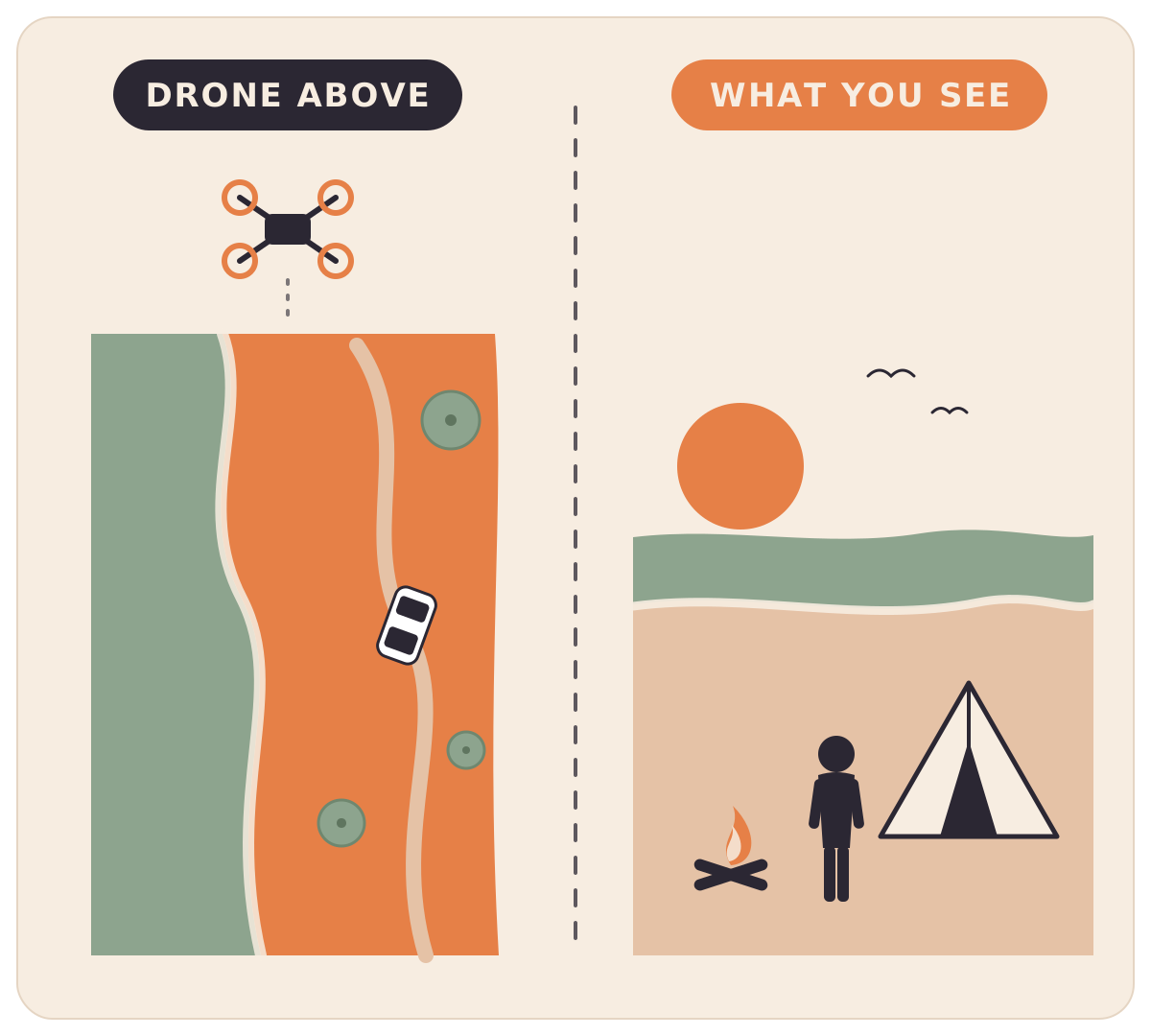
You know the one. Straight down or sweeping low over the coast, the reef glowing in impossible blues, your little boat or vehicle a perfect speck in a vast and flawless landscape. It is genuinely stunning. It stops the scroll. And there is something I have come to find quietly funny about it: nobody on that tour ever saw that view.
You are not a bird
Your guests were not hovering two hundred metres up looking down on themselves. They were on the road in the 4WD, feeling every corrugation. They were in the tent at the beach, listening to the water. They were knee-deep, sun in their eyes, laughing at something someone said.
The drone shot is beautiful, but it is a view that belongs to no one who was actually there. It shows the place as a postcard, not as an experience. And while it might win the booking, it is not the thing anyone takes home.
What people actually remember
Think about your own best trips. The images you return to, the ones that genuinely move you, are almost never the technically perfect ones.
They are slightly blurry. The light is wrong. Someone is half out of frame. But you look at them and you are back there — you can feel the temperature, hear the noise, remember exactly who you were with and how the whole thing felt. A photo like that does something a drone shot never can. It does not just show you a place. It puts you back inside a moment when you felt completely at peace, or could not stop laughing, or knew you would never forget the day.
That is the photo guests remember. Not the one that looks the best, but the one that feels the most true.
Authentic does not mean ugly
I want to be careful here, because this is easy to misread. I am not saying landscape photography does not matter. It absolutely does. Western Australia is breathtaking, and the scenery is a huge part of why people come.
But the landscape images that work are the ones that represent what your guests will actually see and feel. The view from the campsite, not from the sky. The colour of the water from the deck where they will be standing. The track ahead through the windscreen. Those images are still gorgeous, but they are gorgeous and honest. They make a promise the day can keep.
The drone shot makes a promise the day cannot keep, because the day was never going to come with a bird's-eye view.
What this means for how you show your business
Once you start seeing it this way, it changes what you reach for. The instinct to lead with the most polished, most cinematic, most aerial image is worth resisting. Those have their place, but they should not be the whole story, and they should rarely be the headline.
The images that convert and the images that earn trust are usually the same ones: real moments, captured at eye level, on actual departures, showing the experience as it is lived. Some of your best marketing material is probably already sitting on a phone somewhere — a candid frame from last week that is not perfectly composed but is unmistakably real. That photo is doing more work than you think.
The experiences you offer are genuinely good. You do not need to dress them up as something a guest will never encounter. You need to show them honestly, because the honest version is the one people fall in love with, and it is the one that survives the trip home.
That belief sits at the heart of how we help operators present themselves, and it is why we built the platform we did — to make real, in-the-moment imagery just as easy to put front and centre as the glossy stuff. If that resonates with how you see your own tours, we would love to hear from you.